10 Things You Can Still Do
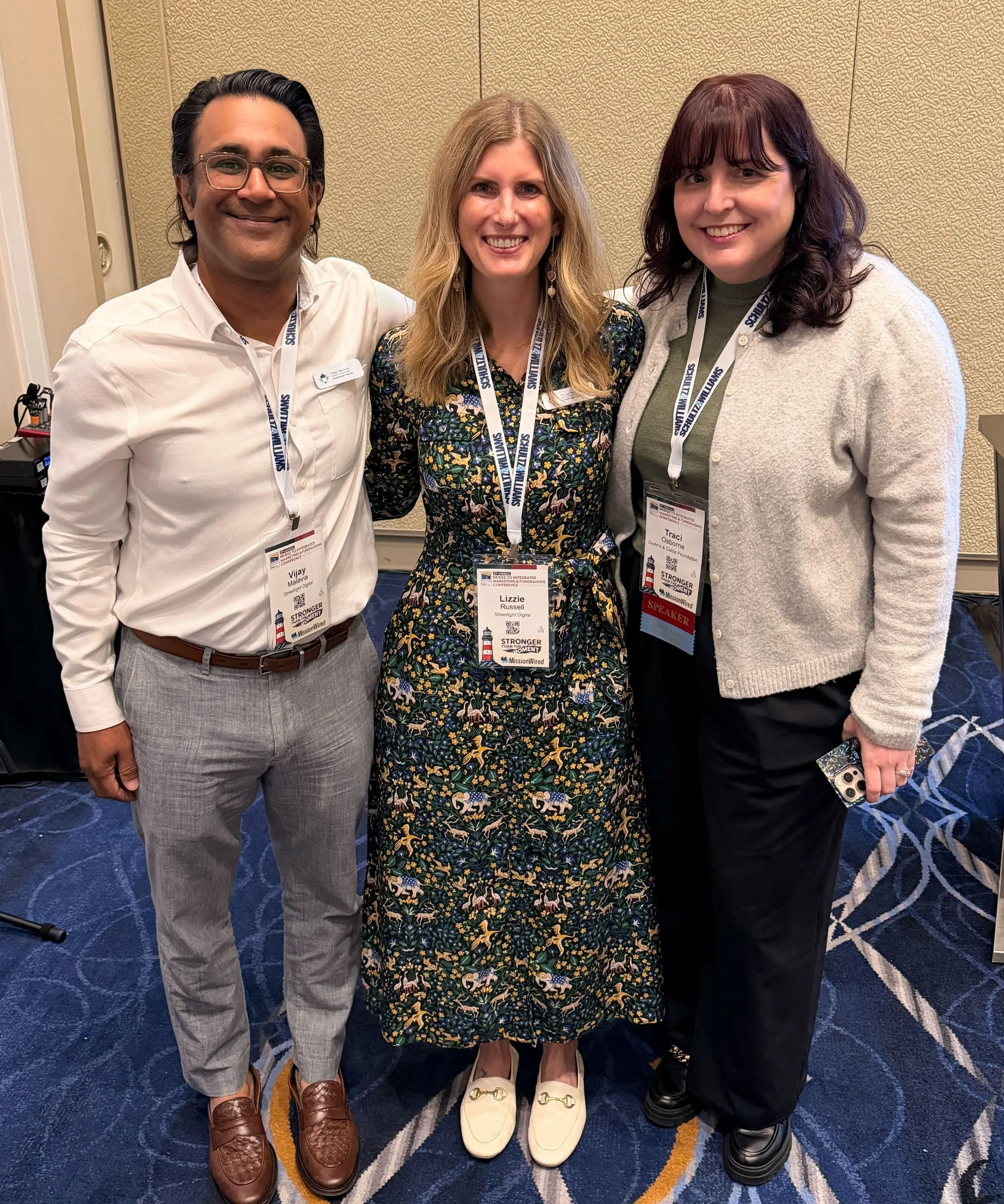
By Vijay Malavia (Director of Digital Media) and Lizzie Russell (Director, Direct Response Strategy)
Streetlight Digital
July 2026
It is July, and giving season is five months out, which means most of what determines December is still in your hands. The organizations that win the final month are rarely the ones bidding hardest on December 31. They are the ones that spent the runway building awareness, cleaning their data, warming their donors, and testing their pages. Here is what we would prioritize between now and then, drawn from what we see across our client accounts.
Build demand now
1. Fund awareness before the season, not just gift capture at the end
Paid search and lower-funnel social are harvesting tools. They capture people who already know you, searched the category, or were close to giving. The catch is that at any given moment only a few donors in a hundred are ready to give, a pattern the Ehrenberg-Bass Institute calls the 95:5 rule, and much nonprofit spend concentrates on reaching that small in-market group. The awareness that moves everyone else toward giving looks non-existent in a last-click report. Brand media, PR, a Reddit thread, a CTV spot, a mention in AI-Powered search: none produce the final click, and all create the demand it captures.
What to do now: For many organizations, this may mean carving out 10 to 20% of paid media for demand creation, using channels that are good at building familiarity like CTV, online video, and digital audio. Then judge it on assisted paths, brand lift, and branded search response, not last-click donations.
2. Watch branded search as your earliest read on year-end demand
People do not wake up on Giving Tuesday and decide from scratch who deserves their money. By the time someone types "donate to [your org]," the decision is mostly made, which makes branded query volume the cleanest leading indicator you have for year-end demand. It moves before the donation does, downstream of the video someone half-watched in September, the peer who mentioned you, the AI answer that named you when a donor asked who to trust.
What to do now: track your share of branded search against comparable organizations in Google Trends, a free check that tends to move months before giving does, and fund a brand defense campaign so you are not paying a competitor's toll to appear for your own name.
3. Make your site quotable, because AI answers shape trust before the click
A June 2026 SparkToro and Similarweb analysis found that 68% of U.S. Google searches ended without a click in the first four months of the year, up from about 60% in 2024. Being cited also stopped tracking with ranking: Ahrefs found the overlap between top-ten organic results and the domains cited in AI Overviews fell from 76% in mid-2025 to 38% by early 2026, and eMarketer projects more than 45% of U.S. internet users will use generative AI for search by 2030, up from 34% this year. An answer engine can now shape a donor's trust in your work, using sources you have never audited, before that donor reaches a page you control. The sharpest near-term hit lands on Google Grant accounts, whose informational queries ("what is [cause]," "where does my donation go") are exactly what AI Overviews absorb. That is a click-volume problem, not a return-on-spend one.
What to do now: build citation-ready evidence pages that are dated, plainly authored, expert-reviewed where the topic warrants it, and easy to quote, add structured data, and invite loyal visitors to mark you as a Preferred Source. For clients with acceptable category risk, this is also the quarter to qualify ChatGPT's ad inventory as a small pilot.
4. Build a story library
According to M+R's 2026 Benchmarks, new online donors drove 31% of 2025 online revenue but came back at just 24%, against 66% for prior donors, which means roughly three in four first-time donors did not return. A bigger revenue year built on unstewarded new donors is a weaker file wearing a strong quarter's clothing. The donors who stay are the ones who come to feel like part of the work, and that feeling is built through story: the person a gift reached, the outcome it created, the mission a donor is now part of. Story is the asset that does that job, and it is also the asset many teams are scrambling for when the season arrives.
What to do now: gather your donor and impact stories over the summer and assemble them with the end uses mapped out. One authentic story, captured once, can be recut into a long-form stewardship piece, a vertical for social, an awareness video, and a short proof point for retargeting. These stories do their work in the awareness push before the season and the follow-up after a gift.
Fuel and direction
5. Feed the platforms better conversion data to get better results
Google and Meta have absorbed targeting, bidding, and placement into automation. What remains in your hands is the conversion signal you feed those systems and the creative you give them to serve. Most nonprofit accounts still pass a single generic donation event, then wonder why the algorithm optimizes toward shallow volume. A bidding system can only chase the outcomes you report to it, so the signal has to be three things at once: complete, safe, and fast. Complete means the offline and recurring gifts that never touch the platform still make it back in. Safe means the data respects consent and sensitive-category rules by design, not as a cleanup step. Fast means the platform hears about a conversion quickly, because latency during peak hours leaves bidding optimizing on stale information at the moment volume spikes.
What to do now: pass gift value, not a flat event, separate one-time gifts from monthly gifts from leads and advocacy actions, and feed offline and CRM outcomes back through enhanced conversions or the Conversions API with hashed identifiers. Decide before Q4 what data you will and will not pass, which matters most for medical, veterans, and advocacy organizations, since mission data can imply health status or protected characteristics. Get conversions to the platform directly: routing Google Ads conversions through a GA4 import, for example, adds latency you do not want when December 31 bidding depends on real-time feedback. Give creative the same care, with enough variety to hand the system real choices instead of one execution to optimize into the ground.
6. Set guardrails so automation stops spending on your brand and competitors
When every nonprofit floods the same platforms in December, costs climb, and the accounts that suffer most are the ones on autopilot. Performance Max is built to find the path of least resistance, and brand is almost always that path. Without guardrails, it takes credit for demand you owned to begin with, and we have seen accounts where a high percentage of PMax spend and conversions came from brand terms. The same logic runs outward. Non-brand broad match, AI Max, and PMax will also serve against competitor and peer-organization queries, so in the absence of negatives, exclusions, and brand controls you may conquest by accident, at a higher cost, against a donor who wanted someone else. There is also a change with a date on it: starting August 17, 2026, Google adjusts how Target CPA and Target ROAS behave on budget-limited campaigns, moving delivery toward the target you entered and away from the better number you may have been getting, and it will not reset stale targets for you.
What to do now: apply brand exclusions and account-level negatives to stop cannibalization, then decide your conquesting posture on purpose instead of letting the algorithm decide it. Audit your budget-limited campaign targets before August 17 so the repricing does not catch you heading into peak.
Win the moment
7. Hold budget for the late-night peak
This is one of the last real edges on the calendar, because it is one of the few things you can still affect on the night itself. A trend we’ve seen on December 31, a click at 9 PM converted at 53% against 33% at 9 AM, on volume one click apart. Grouped, the two evening hours converted at 56% versus 31% in the morning on nearly identical traffic. Fundraise Up's platform data shows the same 8 to 9 PM peak across U.S. donors, roughly 50% above their annual average. It is possible to exhaust campaign budgets earlier in the day and miss that high-converting window.
What to do now: pace budgets to stay live through the final evening instead of front-loading, and hold a reserve for the last hours of Giving Tuesday and December 31.
8. Break the sameness with a trusted messenger
By December, nonprofit feeds can look similar: an urgent deadline, a matching gift, an affecting image, a donate button. When a donor sees a dozen versions of that appeal, the sameness itself becomes the cost, and polished institutional creative often struggles to break through. A trusted person speaking to the camera is the clearest pattern interrupt available, and both Meta and Google have made it easier to run paid distribution from a creator's own handle instead of the org's page.
What to do now: trust matters more than production value here, so the question is who your audience already believes, whether that is a clinician, a veteran, a caregiver, or a local advocate, instead of who has the largest following. Give that person room to speak to the real objections a donor has, and put paid distribution behind them. Most of the video you need for this already exists in some form and can be recut rather than reshot.
9. Audit Your Donor Experience Before Q4 Traffic Hits
Before the year-end rush, it's worth checking whether your messages are actually landing: deliverability, list hygiene, sender reputation, segmentation, the works. AI-generated inbox summaries and previews are also changing the game, so subject lines and preheaders need to earn the open more than ever. And once someone clicks through, your donation page needs to close the deal, with fast load times, mobile-friendly design, digital wallets, and smart recurring-gift defaults all mattering when traffic spikes.
What to do now: Run a full donor journey audit, from inbox to text to completed gift. Check how your emails render in AI-assisted inboxes, and fix friction points now before Q4 volume hits.
10. Prepare for a More Competitive Fundraising Environment
The 2026 midterm election cycle is expected to create new challenges for year-end fundraising, from increased competition for donor attention to rising costs across fundraising and marketing channels. Political campaigns can drive up demand for advertising inventory and communications resources while flooding inboxes, social feeds, and other media with competing messages. Research from recent election cycles suggests that donor intent to give to charities can soften during peak campaign periods, as some supporters redirect contributions toward political causes or delay their charitable giving amid uncertainty. In major donor markets such as Texas, California, and New York (where political spending is expected to be especially heavy) nonprofits may find themselves competing not only for attention but also for donor dollars. The challenge will be breaking through the sheer volume of election-related content that supporters encounter every day. As a result, coordinated messaging across email, SMS, paid media, social, and other channels will be essential to maintaining visibility and engagement throughout Q4.
What to do now: Review your Q4 fundraising calendar against key election milestones, identify where donor attention may be most fragmented, and build a coordinated multi-channel communications strategy that can cut through election-season noise and keep your mission top of mind.