P2P Wrapped: Insider Insights from the P2PForum26

We’re excited to bring you Peer-to-Peer (P2P) Wrapped, our insider look at the most valuable takeaways from P2PForum26 and the 2025 Top 30 P2P Programs. At this annual conference, we had the chance to see firsthand how today’s top P2P  event fundraising programs are driving growth, fostering strong human connections, and building operational resilience. 
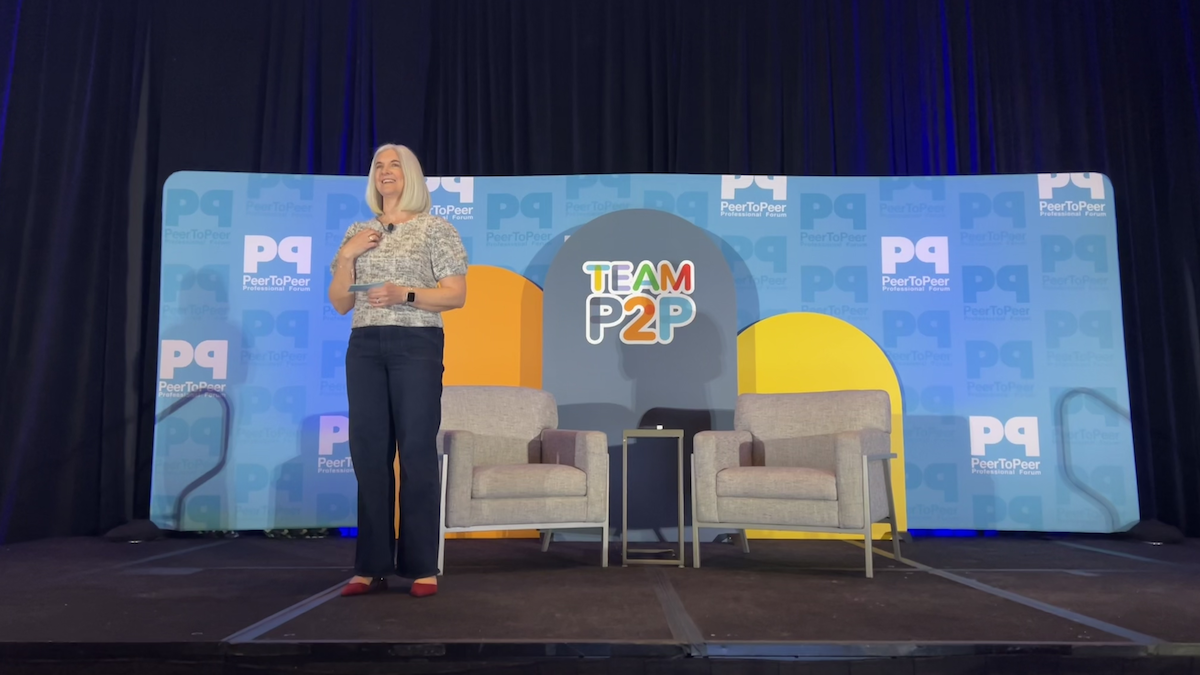
On stage at the General Opening Session, Natalie Stamer, Co-Owner and Managing Partner of Streetlight Digital, led the analysis of the 2025 Top 30 & Benchmarking Study

Natalie Stamer, Co-Founder and Managing Partner of Streetlight Digital, led the analysis of the 2025 Top 30 & Benchmarking Study. She shared that, over time, the P2P industry has seen 3% revenue growth, even as overall participation has declined.

This contrast signals something important: while fewer people may be signing up, engagement remains strong. For organizations, it underscores the critical role of participant activation within a P2P strategy. The opportunity isn’t just about acquiring more participants; it’s about equipping and inspiring those who do show up to fundraise more effectively.

Natalie also emphasized that while 3% growth may sound modest, it represents something far more meaningful. Sustained growth in a mature, competitive space reflects deep dedication, strong community ties, and operational discipline. Small margins achieved consistently over time point to underlying strength, and that’s an accomplishment worth recognizing.
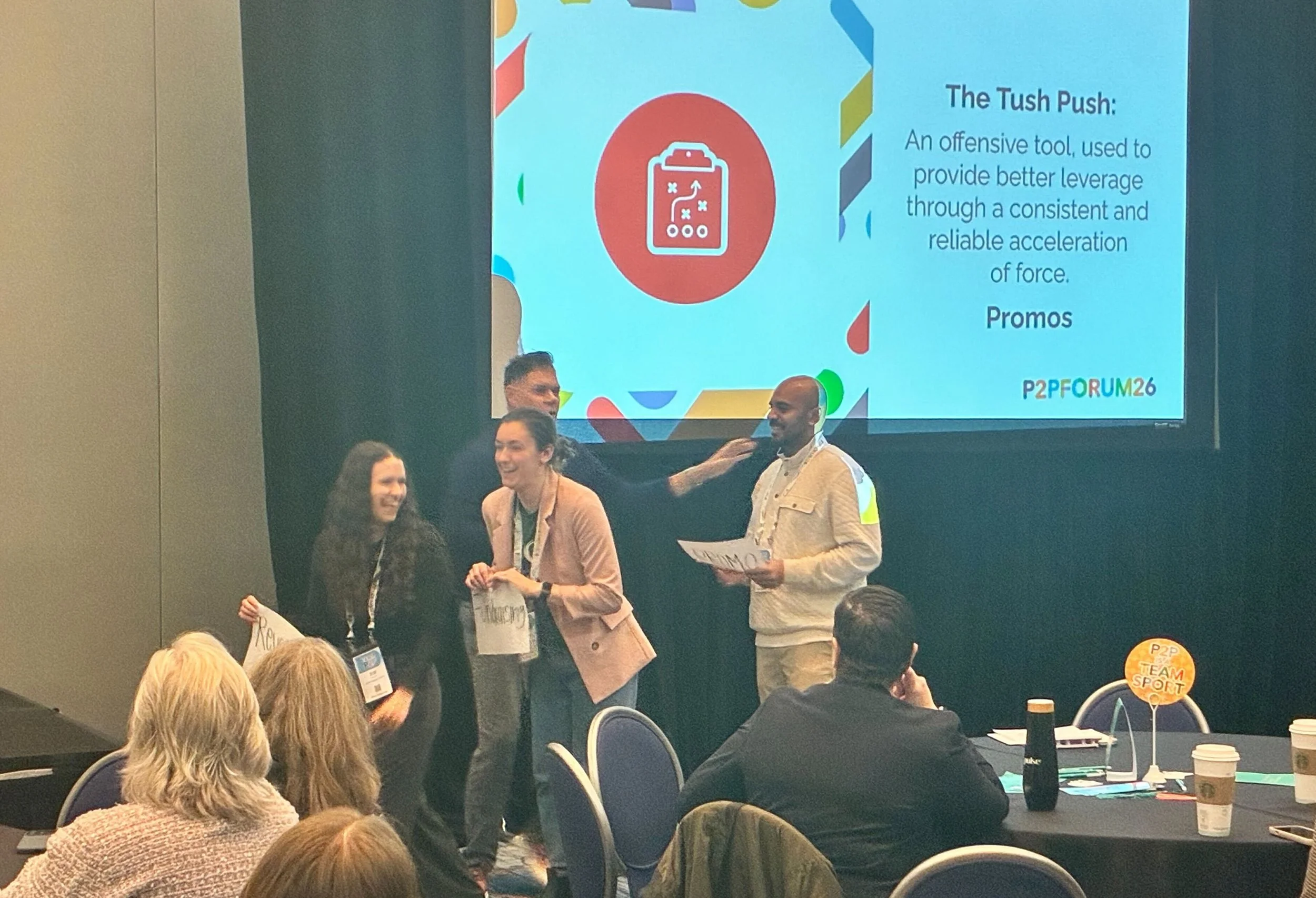

Action shot of Streetlight’s Kevin Sims (Director of Strategy, Streetlight Digital) demonstrating the power of a “tush push.”

Workshop Highlight: Commitment Required for Growth + The Famous Tush Push

“A lot of people notice when you succeed, but they don’t see what it takes to get there.” Dawn Staley, College Basketball Coach

In a hands-on session featuring Streetlight client Make-A-Wish America, Maggie Gibbons joined Streetlight’s Colleen Legge (VP of Strategy, P2P) and Kevin Sims (Director of Strategy, P2P) to explore the essential elements of building a gold-standard P2P program, one that drives transformative year-over-year revenue and deepens participant loyalty.

Maggie’s “Always Be Coaching” philosophy underscored a powerful truth: meaningful, individualized support, far beyond automated notifications and generic “thank-yous”, is what keeps participants engaged, confident, and motivated to fundraise. Thoughtful coaching creates connection, and connection fuels results.

Importantly, Maggie shared that this work is still in progress. She has clearly defined what her “Gold Medal” program looks like and is intentionally aligning her team around it. Her guiding belief is simple and focused: what you feed grows, and what you starve dies. That clarity is shaping where her team invests time, energy, and resources right now.

Central to all of these strategies is a simple but powerful truth: how you communicate with and guide participants directly influences their engagement, and ultimately, their results. And sometimes, growth doesn’t require a bigger campaign. It requires the right push at the right moment.

We couldn’t resist sharing an action shot of Kevin Sims illustrating the power of a “tush push,” a short, high-leverage promotional burst designed to spark early fundraising momentum through timely incentives.

In one case study, this approach came to life through a two-week, $50-threshold sock promotion targeting both registered participants and prospects. The goal wasn’t just to increase registrations, but to activate more fundraisers early in the season.

The results were striking:

  • Registrations increased 7% year over year

  • The number of $50+ fundraisers grew by 160%

  • Average dollars raised per fundraiser increased by $24

  • Overall revenue climbed 11%

These impressive results reveal how strategic, well-timed activation moments can dramatically shift early-season momentum and set the tone for stronger engagement and revenue throughout the campaign.
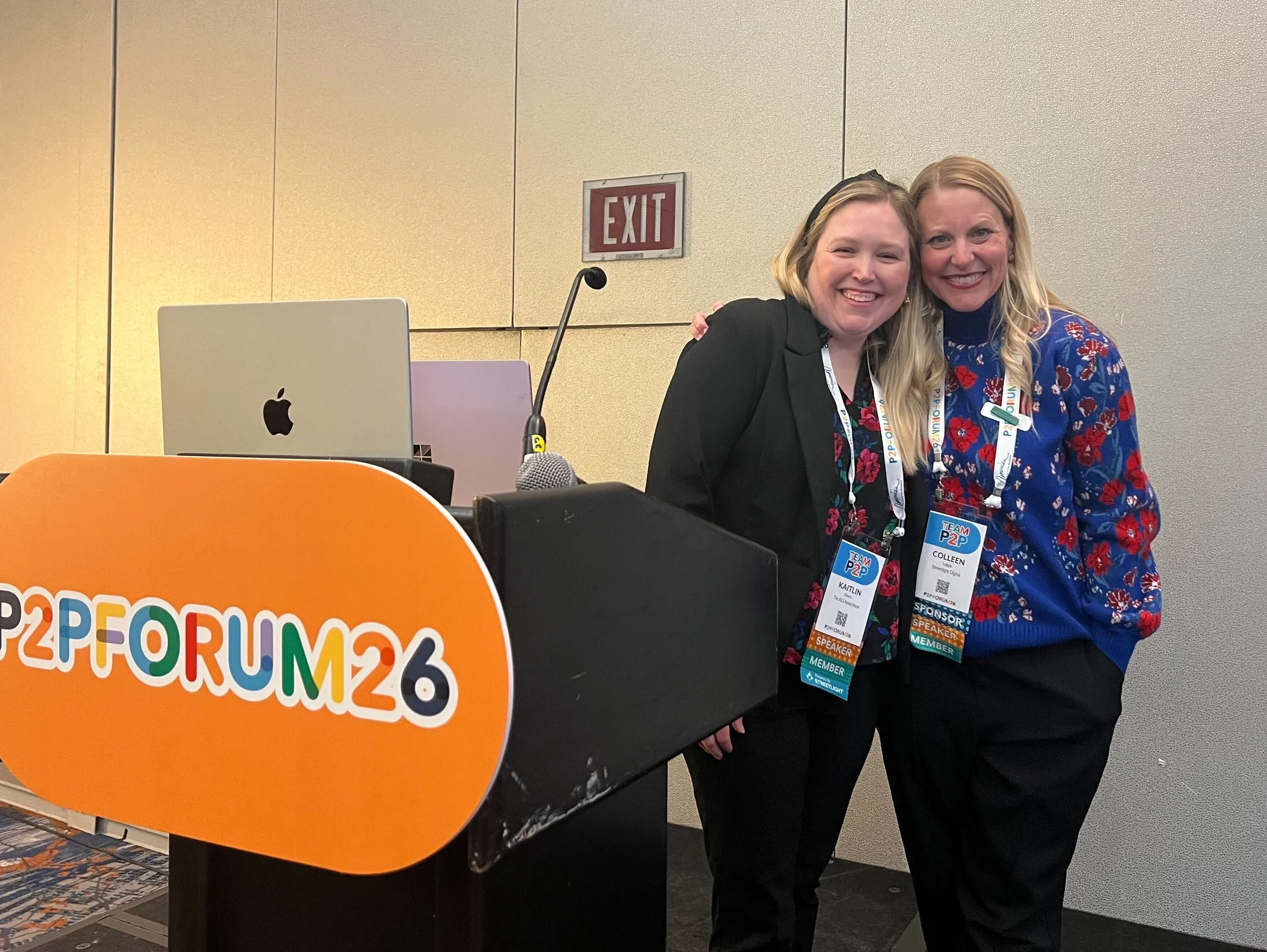

Kaitlin Shore, Director of Digital at the ALS Association, presenting with Colleen Legge, VP of Strategy, P2P at Streetlight Digital

Breakout Highlight: Hope And Urgency in Storytelling


In a compelling breakout session, Kaitlin Shore, Director of Digital at the ALS Association, shared how Streetlight and her team turned P2P storytelling into a fresh strategic narrative for each P2P program, no longer relying on one-size-fits-all recruitment and coaching methods. The goal was simple and clear: cut through the noise and market events in a way that makes someone say, “I want to be part of this.”

Instead of relying on pre-scheduled static email sequences, the ALS team built a comprehensive communication approach designed to answer three essential questions for every participant: Why this event? Why now? Why me?

The strategy pairs two essential forces: hope and urgency. Hope is the catalyst for action. It encourages people to act rather than passively accept difficult circumstances. Urgency clarifies why action must happen now. And how storytelling exists across emails, SMS, websites, paid search, and social. 

This intentional pairing of hope and urgency transforms storytelling from passive inspiration into action. Participants are not just invited to register; they are equipped to understand their role, their impact, and what’s possible when they rally their community.


Breakout Highlight: Uniting Marketing and Development for a Winning Playbook

Vilma Consuegra, Chief Marketing Officer at Wounded Warrior Project® (Streetlight client), led a practical session on the common challenge many nonprofit leaders recognize but struggle to solve: fragmentation between marketing and development teams.

Vilma outlined what happens when organizations move from disconnected “plays” to a unified playbook. By centering work around shared outcomes, shared planning, shared execution, shared measurement, and shared celebration, teams create structural clarity for cross-functional collaboration and eliminate the friction that often slows nonprofit growth.

Instead of marketing generating awareness in isolation while development focuses solely on revenue conversion, both teams operate from common goals and mutually defined success metrics.

When marketing and development define success together, messaging becomes more cohesive, the supporter journey more seamless, and calls to action clearer and more compelling. Over time, these shared structures and habits build trust, reduce duplication of effort, and increase internal efficiency—positioning the organization for more sustainable growth.

Conclusion

In the face of economic shifts, evolving donor behavior, and changing search landscapes, nonprofits are under increasing pressure to demonstrate the value of P2P programs to leadership and to do more with less. Yet the lessons from the Top 30 Benchmarking Study, combined with the themes and practical strategies shared throughout the conference, make a compelling case for why P2P deserves both strategic priority and organizational trust.

P2P programs are uniquely positioned to cultivate long-term loyalty, activate community, and foster authentic human connection in an increasingly AI-saturated world. They also have the resilience to sustain revenue in uncertain environments. Organizations that prioritize these programs and invest in thoughtful, participant-centered strategies see measurable impact over time, proving that small, deliberate improvements compound into meaningful results.

For nonprofits looking to strengthen their internal case, third-party analysis and expert perspective with Streetlight can provide the objective, data-driven insights needed to illustrate P2P’s full potential. By consistently reviewing performance, listening closely to participants, and identifying the specific levers that drive engagement, organizations can make informed decisions and confidently advocate for the investment and focus their P2P programs deserve.
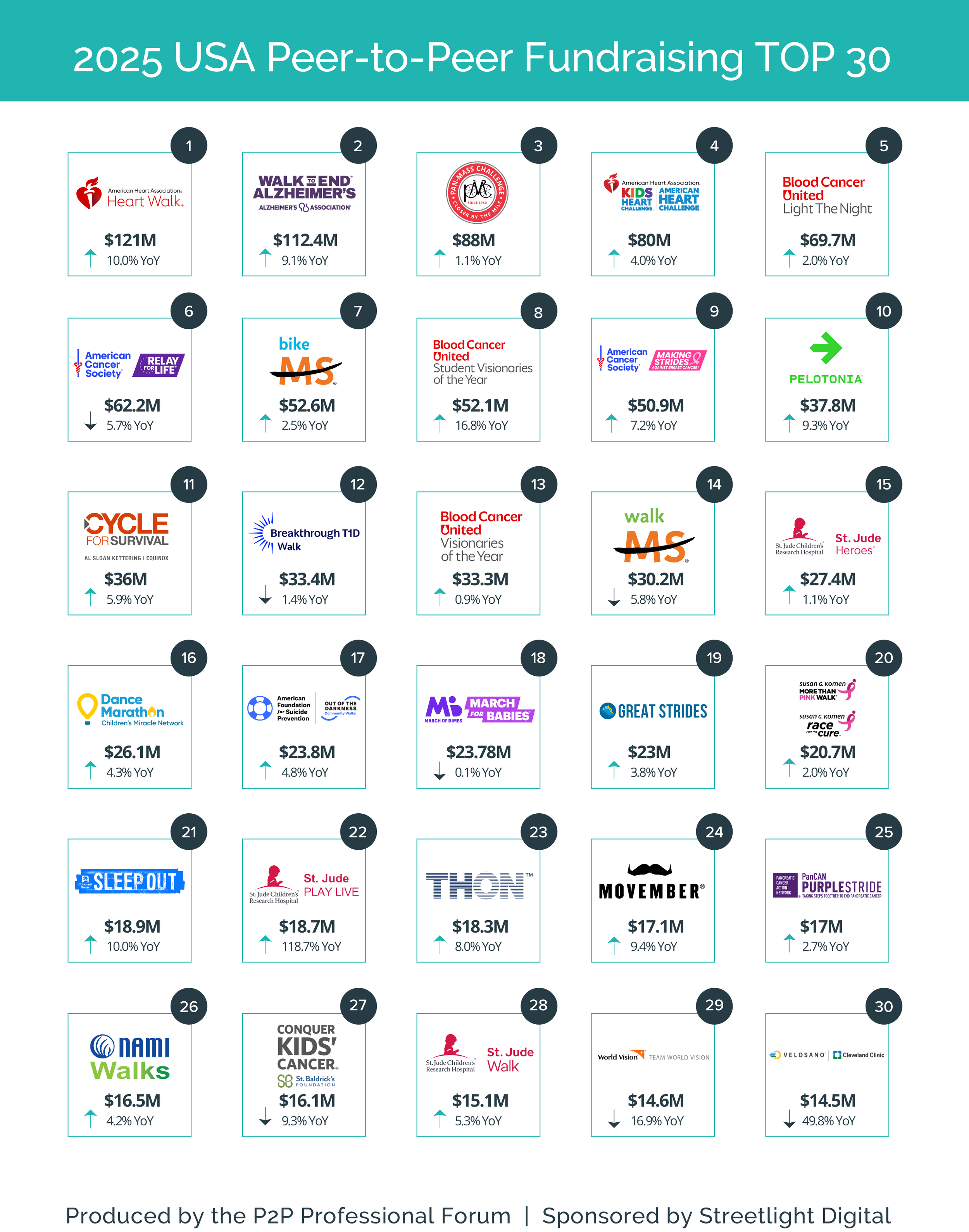
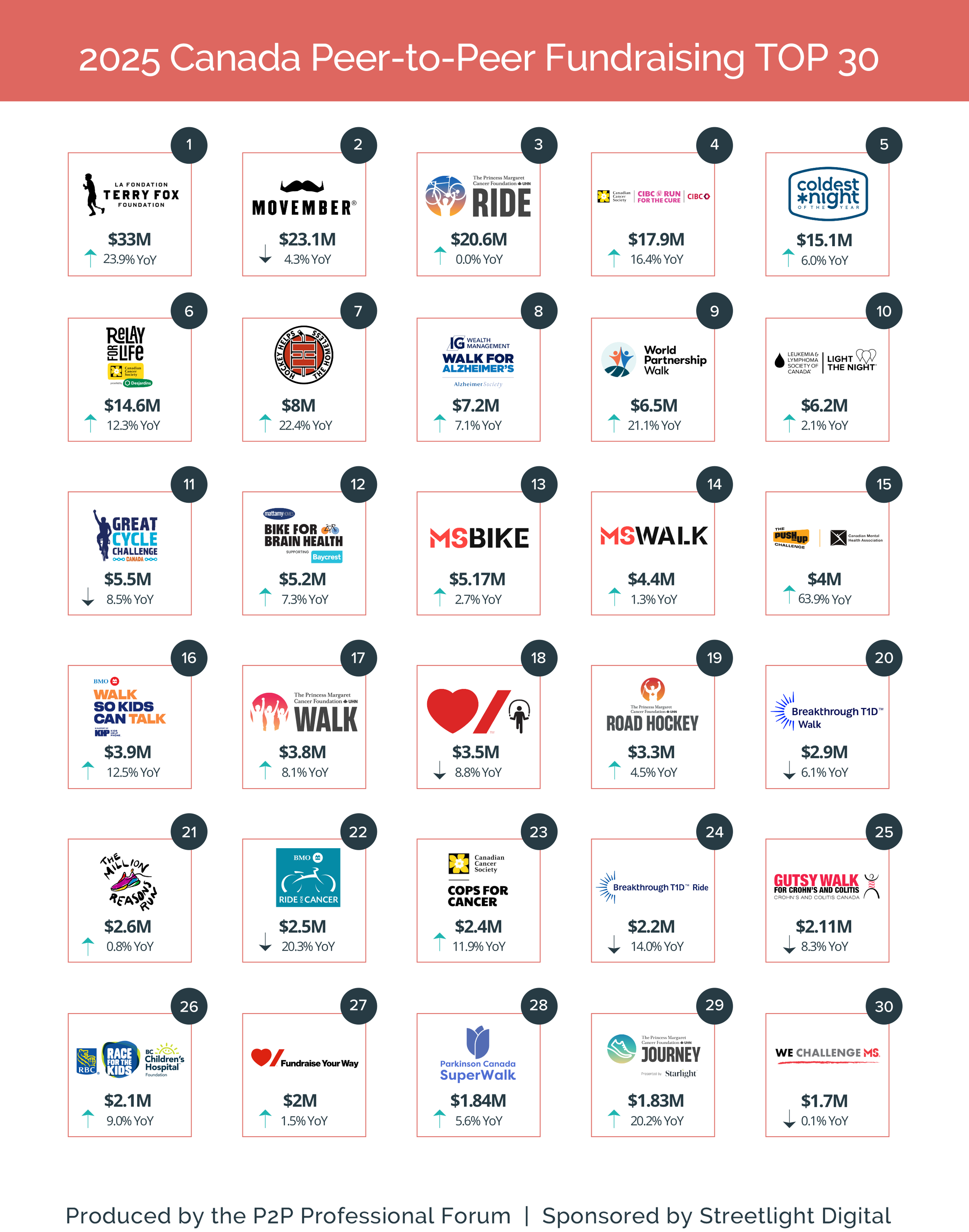
2025 Top 30 Peer-to-Peer Fundraising Programs: Benchmarking Results & Insights

This year, the 2025 Top 30 Peer-to-Peer Fundraising Programs have been revealed for both the United States and Canada. The results were announced on stage on Tuesday, February 24th 2026 at the P2PForum26 by Marcie Maxwell, CEO of the Peer-to-Peer Professional Forum, alongside Natalie Stamer, Co-Owner and Managing Partner of Streetlight Digital. Streetlight Digital, a proud sponsor of both the Benchmarking Data Set and the conference itself, is honored to support this research and highlight the programs that are leading the way in peer-to-peer innovation, resilience, and growth across North America. The long-awaited Top 30 lists for each region are below, showcasing the programs driving impact and innovation across North America.

The defining pattern across the Top 30 programs was approximately 3% annual growth over multiple years, achieving sustained growth. The data did not include dramatic surges or sudden breakthroughs. Yet the Top 30 stood out for their consistent incremental gains, demonstrating the power of small, sustained improvements that build long-term impact.

While on stage at the General Opening Session sharing her P2P Benchmarking Survey analysis, Natalie highlighted that 3% may seem like a small number, but it in reality should be viewed as an impressive feat. It reflects the ability to retain participants in a shrinking donor market, replace aging volunteer bases, sustain engagement with limited staff capacity, and maintain momentum through organizational disruption. In other words, achieving consistent growth in today’s environment reveals operational strength, not modest ambition. This accomplishment is even more remarkable when viewed in the context of two decades of sector difficulties: since 2000, the percentage of U.S. households giving to charity has declined from roughly 66% to 47%, a loss of nearly 20 million donor households. During that same time, P2P programs navigated the Great Recession, COVID-19 event disruption, shifting digital platforms, and staffing and funding volatility. Yet the long-term benchmarking data shows P2P revenue trending steadily upward, a clear demonstration that small margins, sustained over time, produce meaningful results.

Natalie also discussed additional reasons why P2P fundraising remains especially valuable today. She emphasized why it deserves prioritization even when leadership faces pressure to shift resources elsewhere in the face of rising challenges. In a world where AI-generated content dominates the internet, organic traffic is declining, and social media is contributing to a rising global loneliness epidemic, P2P stands out as the antidote. While many organizations are focused on using AI to work more efficiently, P2P programs provide something AI cannot replicate: human connection. Human-generated content has reached premium value in contrast to AI saturated content, and peer-to-peer is the ultimate example. Could P2P be a counterbalance that saves us all from AI overload and keeps us grounded in humanity and connectedness? Streetlight believes the answer is yes.

Over the past 20 years, the Peer-to-Peer Professional Forum community has raised more than $31.9 billion through the programs captured in the Top 30 Benchmarking Study. Each data point represents a lesson learned, a strategy refined, and a story of perseverance. Decades of incremental growth show that while the market, the economy, and your communities may experience ups and downs, deliberate, consistent investment in peer-to-peer fundraising yields measurable results. With these insights in hand, organizations have the knowledge and confidence to weather challenges and prioritize P2P programs as a central driver of community engagement, donor growth, and mission fulfillment. This is the moment to ensure your P2P program receives the strategic priority it deserves, using data as your foundation to build sustainable growth. 

Our Giving Tuesday Report is LIVE!

When Giving Tuesday wraps, smart teams mine the data to shape what comes next.

Streetlight Digital is thrilled to share our Giving Tuesday 2025 Report. It breaks down what actually moved the needle, and what nonprofits should be adjusting now to set up Giving Tuesday 2026 for success. Streetlight’s Co-Owner and Managing Partner, Natalie Stamer, says this often, and it bears repeating: your 2026 Giving Tuesday and year-end fundraising strategy does not begin in the fall of 2026 when you’re starting to feel the pressure of the giving season. It begins right after the giving season ends - and you can start right now.

Read the report to uncover where our clients hit their goals and how to apply those insights to Giving Tuesday 2026.

Ten Shifts That Shaped the Digital Landscape

Happy New Year! This feels like the right moment to pause and take stock of what 2025 brought to the digital landscape, when we are freshly out of the busiest season of the year.

Below are ten significant forces that defined 2025. Some have been building for years, others are just getting started, but all of them will shape what comes next.

Streetlight Digital spent 2025 testing and adapting across these areas with our clients. We’re turning those lessons into frameworks, tools, and clearer strategies, and we’ll share more in 2026.

1) AI Everywhere

AI exploded in 2025 and quite potentially rose above the peak of inflated expectations. It is everywhere. It made its way into all the ad platforms. AI Max. Copy generation. Image and video creation within the platforms. Google has an Ads Advisor that shows potential. Microsoft went all in with Copilot. Google integrated Gemini into Workspace. Tools like SparkToro created functionality that taps into LLMs to create content from audience research. SEMrush and Conductor have connectors with GPT.

We reached a tipping point: it is official, there is now more AI-generated content than human-generated content on the web. However, this might come as a shock, but some people (and search engines) do not appreciate AI-generated content. That places a premium on human content and the places where humans congregate.

The platforms that care about their communities responded. Pinterest introduced user controls to determine how much AI you see. Reddit began testing verified profiles, so you know a user is actually human. Reddit got slammed with low-quality AI content because people realized Google’s AI Overviews were surfacing Reddit threads, so they started spamming Reddit to game that visibility. Wild huh?

2) The Wild West

We are in a wild west phase with AI. There is no blueprint. No manual for how to build AI-fluent teams or how to adopt these tools. No playbook for what should be automated and what should not. Everyone is improvising, learning, and experimenting. Any sales person who tells you they have all the answers: be wary.

We saw proof of this on Giving Tuesday. We analyzed ads on Meta active on December 3, 2025 that contained the word “Giving Tuesday.” We found 1,688 ad archive URLs. 22% of them contained em dashes. That is a signal of unedited LLM output making it onto center stage. It shows how early we still are in figuring this out.

It is promising to see Anthropic investing in Claude for Nonprofits, released in early December 2025. It provides resources and integrations with platforms like Blackbaud. If Anthropic invested in that, OpenAI will probably have something similar soon. They are in a foot race and they are all heading toward the same destination: monetization. We are already seeing conversational ads in Perplexity and OpenAI. The future of visibility within those tools will likely be some combination of organic and paid.

3) The Organic Cliff

One of the most popular questions from clients in 2025: “Why don’t I show up in ChatGPT for this query?” In a way, it is a useful shift. We are finally paying attention to visibility outside of traditional Google rankings.

What caught everyone’s eye was that organic traffic for a lot of nonprofits went down severely. Especially categories like health that rely on informational queries. Those queries were decimated by Google AI Overviews. Zero-click behavior accelerated. Publishers, including nonprofits, are getting fewer people to their websites via organic search.

People are starting to ask better questions. “Traffic is down, but what about gifts and revenue?” Or: “How can I recoup that traffic, and will it come through organic or some other way?” LLMs contributed to the continued fragmentation of search and content discovery. Google is still the biggest player, but the behavior is spreading across more places. People discover content on Reddit, TikTok, Pinterest, and YouTube, and those surfaces increasingly influence perceived authority.

Google’s AI experiences are also evolving quickly, and Search Labs experiments are often the earliest signals of where things are headed. One pattern is clear: Google increasingly favors experiences that keep users inside its ecosystem. We saw this over time as YouTube became more prominent in traditional search, and we are seeing a similar dynamic now with local and entity-style results showing up more inside AI-influenced experiences. A smart move for 2026 is improving local visibility: optimize Google Business Profiles across locations and align them tightly with location pages, including categories, descriptions, hours, photos, posts, Q&A, and review management.

4) The GoFundMe Fiasco

In the fall, GoFundMe got exposed. They had created donation pages for nonprofits without their knowledge, collecting donations, taking a fee, and giving nonprofits no way to follow up with donors. Not great.

But the real lesson wasn’t about GoFundMe. These pages had been ranking in organic search for a long time before anyone noticed. It pointed out how easy it is to overlook SEO. If more of us were monitoring branded search results, this would have surfaced much earlier.

SEO is not a faucet you can turn on like paid media. It is insanely complex and requires a literal Swiss Army knife of skills and discipline. And it usually ends up living in the wrong place within nonprofit orgs. The biggest takeaway from the GoFundMe situation: SEO deserves more attention than most of us give it.

5) Privacy Matters More

The year started with Meta rolling out data restrictions for sensitive categories like health. First phase in February, second phase in the summer. For impacted advertisers, this required us to fundamentally reconsider how we measure events, build audiences, and capture important outcomes.

It forced conversations about faster adoption of server-side tracking and moving away from the old ways. Google acknowledged the crisis in May 2025 with the release of Google Tag Gateway (formerly First-Party Mode). This gave advertisers a lifeline: a way to route tags through our own first-party domains via a CDN like Cloudflare, without the massive IT overhead of a full server-side container. It was not a silver bullet for the Meta policy restrictions, but it helped stop the bleeding from browser-based data loss.

6) The PMax Black Box and Brand CPC Inflation

Automation is where the major ad platforms are headed, and Google Performance Max is the clearest example. It asks advertisers to trade control for scale, and most settings act as signals, not levers.

The problem is that transparency lagged adoption. In 2024, scripts existed to surface channel insights and search terms, but most advertisers were not using them. In 2025, many organizations may have overbudgeted for PMax because the in-platform reporting arrived late and the campaign often looked like it was “working” without showing what it was actually doing.

Once you look inside, two patterns show up fast. First, brand cannibalization: we have seen cases where 95%+ of PMax spend and conversions come from brand. Second, quiet conquesting: PMax can expand into competitor terms even when that was never the intent. Layer that onto Google’s push toward broad match, smart bidding, and query expansion, plus weaker organic visibility that forces more nonprofits to compete harder for high-intent traffic, and brand CPC inflation starts to make sense.

Meta is moving in the same direction with Advantage+. The work shifts away from hunting for one perfect audience and toward building distinct creative angles for different personas, then feeding the system clean signals so it can match message to people across placements.

7) YouTube is TV and Creators are the Format

It is the biggest screen in the house, and it is where attention keeps consolidating. We can buy it in more ways than ever. Demand Gen lets us lean into YouTube intentionally, and reserved inventory is more accessible without needing a Google rep. That democratized inventory that used to feel gated.

What stood out this giving season is what actually cut through on those screens. Creator and influencer nonprofit videos were everywhere. It was a clear counterweight to AI slop and templated ads.

The best performing video often looked more like a person than an ad. Partnership ads let you take a creator post that works and scale it through paid distribution. That is the unlock. Not “everyone needs influencers,” but that attention and trust increasingly travel through people, and the platforms are making it easier to pay to distribute that kind of content.

8) The Creator Surge

Creator-led nonprofit video exploded this giving season. In feeds that feel more automated and crowded, a real person speaking to camera is the clearest pattern interrupt.

Meta and Google’s partnership ad updates made the shift bigger: nonprofits can run paid ads from the creator’s handle, not just their own page. That changes how the message is received because it carries a human trust signal, not a brand label.

This is peer-to-peer fundraising logic at scale, with one critical upgrade over organic influencer posts: it stays fully trackable, so “word of mouth” can be evaluated like media.

9) The Flight to Safety (and the Inbox War)

In 2025, as Meta and Google pushed harder toward automation, the list became the most controllable lever left. But two things changed fast: inbox AI summaries (notably in Apple Mail and Gmail) started mediating what donors actually see, making open rates less useful and putting new pressure on subject lines and the first line of copy. At the same time, nonprofit SMS volume surged, and fatigue showed up quickly in opt-outs and weaker response to blast-style texting. The list still matters, but 2025 raised the cost of abusing it and lowered the margin for sloppy deliverability and trust.

10) What We Learned in the Giving Season

Paid media showed up when it mattered most, and paid search in particular performed strongly. Microsoft also surprised us with performance and earned a bigger seat at the table going into 2026. Timing mattered more than ever, not just Giving Tuesday and December 31, but the days leading into them when intent was building. We also saw meaningful conversion activity into the evening hours, which makes budget pacing and end-of-day visibility a real performance lever.

This giving season was one for the books and from our side of things with seemingly endless insights to share. Streetlight Digital is preparing a comprehensive report highlighting the peaks and valleys of Giving Tuesday and Year-End Donations soon. This will provide incredible insights for our nonprofit friends for your 2026 fundraising strategy. Stay tuned!

What you need to know about iOS 26

How you should prepare right now

Marketers talk a lot about cookies and AI, but iOS 26 affects what supporters actually see. Unknown-sender screening is user controlled and off by default, yet when it is on your first texts move to Unknown Senders and stay quiet. Spam filtering is on by default. The fix is simple: get saved to contacts, prompt quick replies, and keep opt-ins clean.

Enhanced Spam and Unknown Sender Filtering

iOS 26 adds stronger text controls. Screen Unknown Senders is off by default and must be turned on by the user. When enabled, texts from numbers not in a person’s contacts move to Unknown Senders and often don’t notify. Separately, the built-in Spam filter is on by default and routes suspected junk to a Spam folder. These settings can reduce visibility for legitimate outreach if supporters don’t recognize your number.
Adoption to watch: we don’t yet know how many iOS 26 users will enable screening. Expect some supporters to enable it, not all. Track adoption on your list and adjust if visibility drops.

Key Changes for SMS/MMS Deliverability

Automatic spam classification
The default spam filter uses on-device machine learning to flag suspected junk and place it in Spam. Users can mark Not Spam to restore a thread. Misclassification can happen.

Message screening (Unknown Senders)
If a user turns on Screen Unknown Senders, texts from numbers not in Contacts no longer appear in the main list. They live in Unknown Senders with quiet notifications. Think Gmail’s Promotions tab: delivered, but not front and center.

Notifications
With screening on, notifications from unknown numbers are silenced by default. Some time-sensitive items such as verification codes can surface briefly, but don’t count on that for appeals.

Becoming “known”
A sender is treated as known when the user adds the number to Contacts, marks the thread as known, or replies enough that the filter stops applying. In practice, a few replies usually moves the conversation back to normal behavior.

On-device processing
Filtering runs on the iPhone. There’s no Apple report explaining why a message was filtered, so you’ll need to watch engagement data to spot issues.

What does this mean for your SMS/MMS fundraising strategy?

  • Work from real opt-ins. Cold or questionable lists are more likely to sit unseen.

  • Use a recognizable sender. Dedicated short codes or verified toll-free help supporters identify you; keep 10DLC registration current.

  • Prompt early replies. Ask simple questions so you become known faster.

  • Monitor iPhone segments. Break out results by OS, track reply/click/conversion trends, and watch screening adoption in your audience.

Your Immediate Action Plan: 4 Steps to Protect Deliverability and Revenue

  1. Brand every message for instant recognition
    Start each text with your name (for example, “[YourOrg]: Thanks for your gift…”).

  2. Ask supporters to save your number
    Add “Save 12345 in your contacts so you don’t miss urgent updates” to email footers, receipts, and welcome flows. Include a vCard in the first SMS.

  3. Prompt quick replies
    “Want event alerts? Reply YES or NO.” After a few replies, unknown-sender filtering typically stops for that thread.

  4. Prioritize people who reply
    Tag those contacts and give them priority updates. Send less to people who never engage.

Final note

This follows Apple’s pattern of giving users more control. Text still works, but recognition now drives visibility. Get saved to contacts, invite replies early, keep the list clean, and back up key moments with email or push.

Channel Attribution: What Nonprofits Need to Know This Year

Channel Attribution is error-prone and incomplete, but it's not useless. How can nonprofits use it smarter? Read below.

Channel attribution is the process of assigning credit to marketing touchpoints that influence a conversion. For nonprofits, it attempts to answer: "Which marketing efforts led to this donation?"


It's important for two reasons.

First, attribution attempts to provide tactical data for campaign decisions. Second, nonprofits have limited resources and need to prove ROI to boards, funders, and stakeholders. We need data to justify every dollar spent.

But here's the fundamental problem: There's a massive disconnect between where people spend their time and where marketing budgets go. People spend hours consuming podcasts, scrolling TikTok, and reading Reddit threads. Yet most nonprofit budgets flow disproportionately to Google and Facebook. Why? Because those platforms have mastered the art of claiming credit through click-and-view-based attribution.

In an article published by NonProfit Pro, Natalie Stamer, co-owner and managing partner of Streetlight Digital, shares how nonprofit leaders can stretch their dollars and maximize impact by learning about this important issue. Read the full article here.

Giving Tuesday 2024: Nonprofit Fundraising Insights Revealed!

This year's Giving Tuesday was a testament to strategic, multichannel marketing. Some key takeaways from our latest report:

  • Streetlight Clients averaged a 52% year-over-year increase.

  • Total online donations, as reported by GivingTuesday.org reached $3.6 billion - a remarkable 16% year-over-year increase!

  • Success is all about early planning, diverse engagement channels, and data-driven optimization. Organizations that started early and leveraged multiple platforms saw incredible results.

Standout strategies included:

  • Comprehensive multichannel approaches (email, SMS, social, CTV)

  • Matching gift programs that created urgency

  • Real-time campaign adjustments based on performance data

For nonprofits looking to maximize their end-of-year fundraising, the message is clear: strategic, authentic, and adaptive marketing makes all the difference.

Want to dive deeper? Check out the full Giving Tuesday Report!

Calling All Nonprofits: Add Your Data to a NEW Digital Fundraising Benchmark Report

Calling All Nonprofits: Add Your Data to a NEW Digital Fundraising Benchmark Report

When it comes to measuring success in the nonprofit fundraising space, benchmark studies typically fall into two separate categories: one for peer-to-peer programs and another for direct response. But what happens in that sweet spot, at the intersection of these two worlds?