Our Biggest Takeaways from Bridge 2026
Our direct response team recently spent three days at The Bridge to Integrated Marketing & Fundraising Conference, and we came home with pages of notes, sore feet from many hallway conversations (and some karaoke, of course!), and one very clear realization: The fundamentals of fundraising are not being replaced, they are being rewritten in real time. People still give to people. Trust is still earned, not assumed. Donors still want to feel something before they give something. What is changing is how quickly that trust has to be built, and across how many more channels it now has to travel.
Here is the version of Bridge 2026 we would tell a colleague over coffee: the sessions that stuck with us, the stats that made us pause, and the ideas we can’t wait to bring back to our clients.
Trust Is the Currency
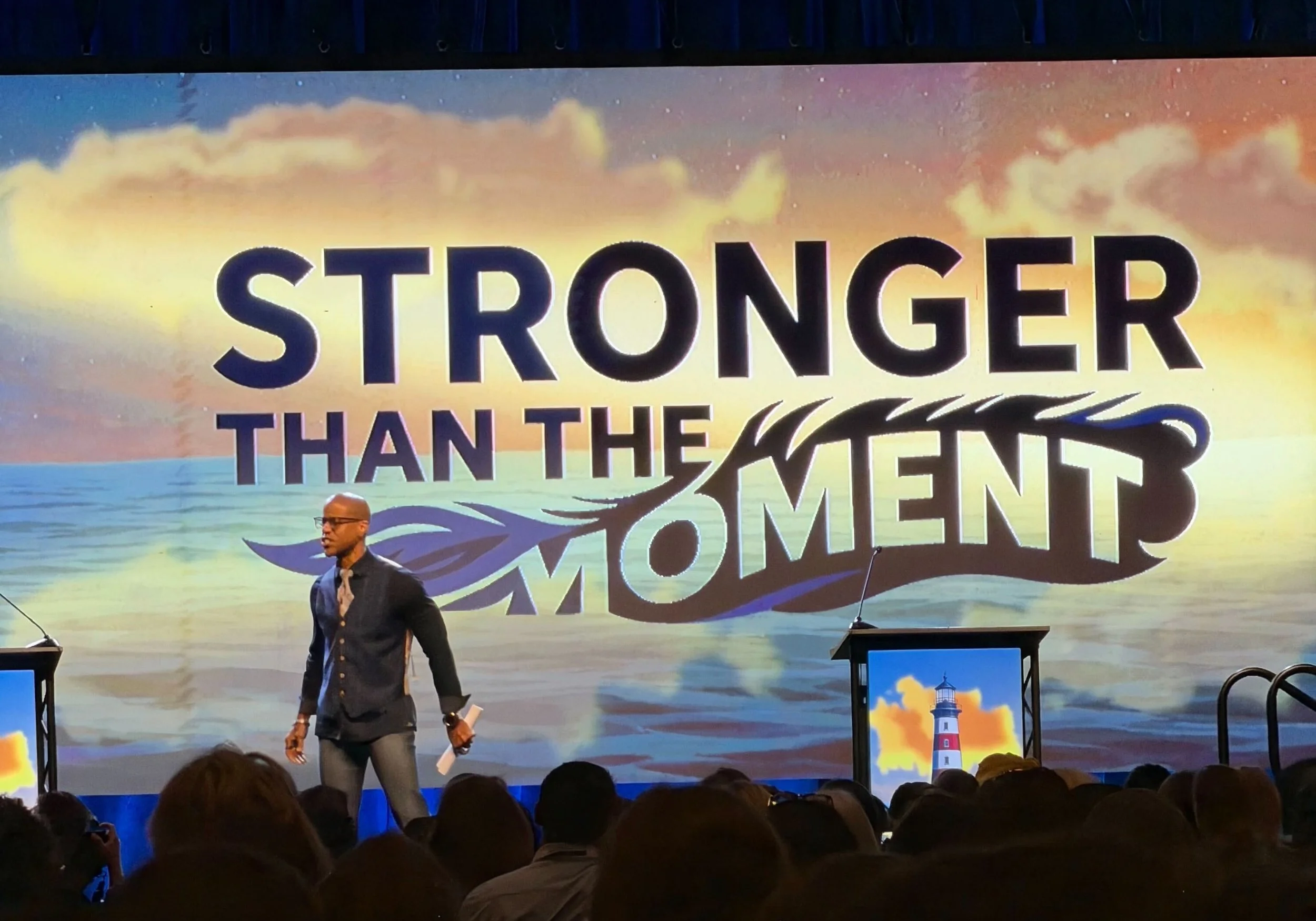
Keynote speaker Americus Reed II, a professor at the Wharton School, presents a reframe on donor identity.
Opening keynote speaker Americus Reed II, a professor at the Wharton School, set the tone for the entire conference with a simple reframe: nonprofits are not just in the donation business, they are in the identity business. Every donor is asking three questions of the organizations they support. Who am I? What do I believe in? Who will I become? The nonprofits that can answer those questions, Reed argued, are the ones that earn something far more significant than a single gift.
He described this as an identity ladder, climbing from information and awareness at the base, through engagement and trust, up to identity, advocacy, generosity, and finally legacy. Donations, he reminded the room, are often not the only currency an organization can earn. Attention, self-expression, and belonging matter too.
The most memorable line of the morning: if you are hiding from being a brand, you are making a mistake. Beautiful brands connect who you are with who your donors are, or want to become. Think of Apple. It gives its users language, creates community, and turns customers into voluntary ambassadors. Reed's challenge to the room was to build a community worth belonging to, one where people naturally invite others in, and to never let anyone else tell your story for you. As competition for attention grows, he argued, the real competitive advantage shifts from budget to trust.
The Friction Problem, and the Clock That Is Ticking
We kicked off day one with a challenge we would encourage every nonprofit marketer to try. Pull out your phone right now and attempt to donate to your own organization. How long did it take? How many fields did you have to fill in? How many times did you almost give up?
If that experience felt frustrating, your donors are almost certainly feeling the same friction. Every extra click, form field, or moment of hesitation is a small tax on conversion, and those small taxes add up.
That challenge landed next to a trend we've been watching for a while now: charitable donor participation in the U.S. has been declining for years. Nathan Chappell put a hard number to it during his session. We have lost two-thirds of individual donors over the last 20 years. If that trajectory continues, participation hits zero in 24 years. Reversing it starts with rethinking how we engage supporters and removing the barriers standing between intent and action, starting with friction at the moment of giving.
One Size Fits None: Generational Giving Strategies
A session from Arreva made a case that many organizations already suspect but rarely act on: a single fundraising strategy cannot serve four very different generations of donors. The pressure is real. One in three nonprofits are already experiencing government funding disruptions, and a proposed $163 billion cut to domestic discretionary spending is on the table. Total giving dollars are still climbing, but who is giving, and why, is changing fast.
The generational snapshot, in brief:
Boomers (ages 61 to 79) are legacy givers who trust institutions and hold the majority of current wealth. They respond to personal thank yous, direct mail, and phone calls.
Gen X (ages 45 to 60) are results driven givers at the peak of their careers and giving capacity. They want efficiency: automated giving options, smart reporting, and outreach through email, LinkedIn, and Facebook.
Millennials (ages 29 to 44) are purpose led givers who fund causes, not just organizations. They expect transparency, real time donation tracking, and engagement through social campaigns, real stories, Instagram, and peer to peer fundraising.
Gen Z (ages 13 to 28) are change seekers who may not hold significant wealth today, but represent real lifetime value. They respond to authenticity, interactivity, and fast impact content on TikTok and SMS, often introduced by creators and influencers they already trust.
A wealth transfer is coming over the next 20 to 30 years, and 70 percent of donor wealth currently sits with Boomers and Gen X. The session's framework for building an ask that works across generations was simple and sticky: hook, heart, hand. Hook them with urgency or curiosity. Move them with a concrete picture of transformation at a specific gift level. Give them a clear, time bound call to action. Bake the stewardship plan in from day one, not as an afterthought.
When AI Answers First, Trust Has to Travel Further
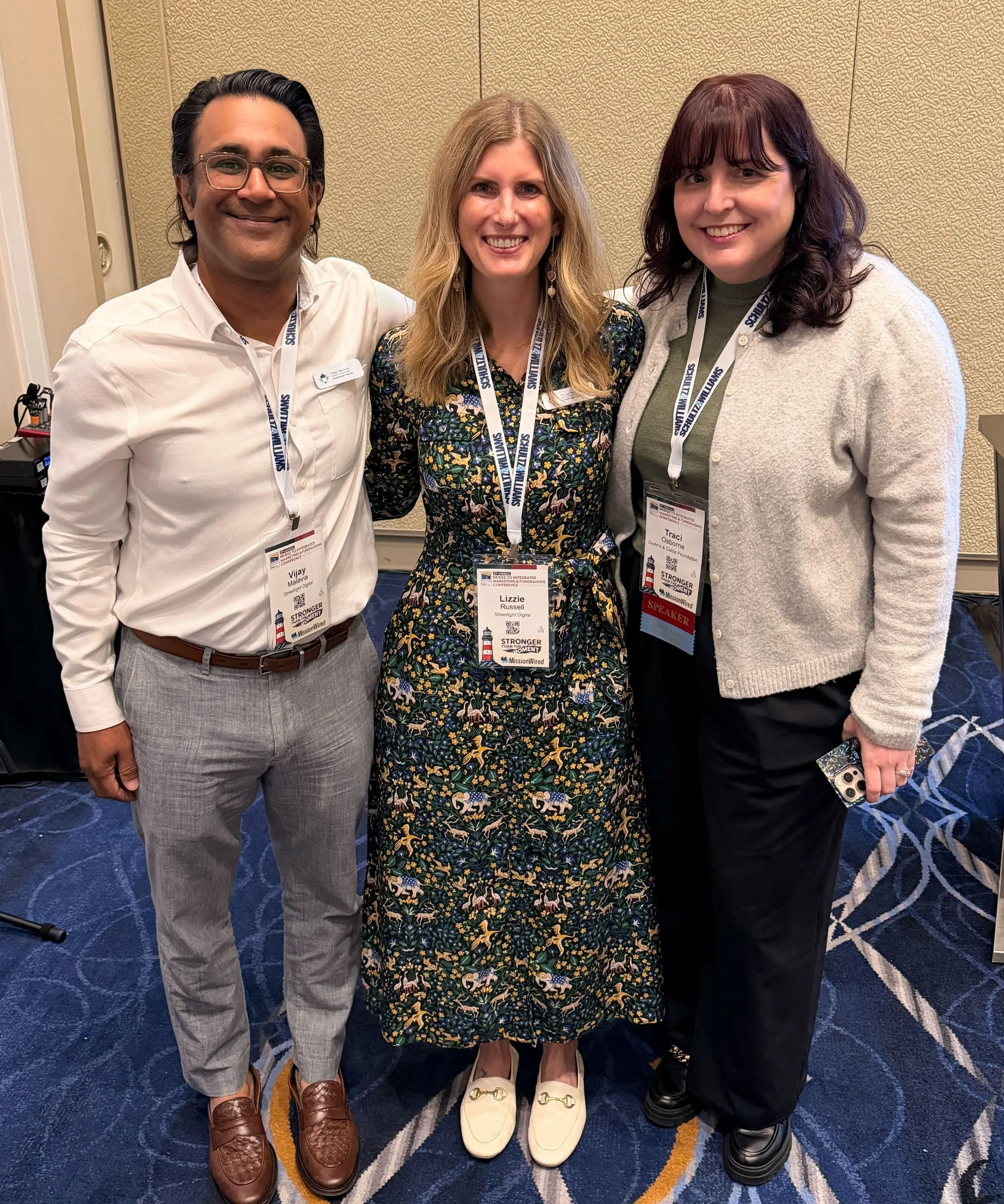
Streetlight’s Vijay Malavia (Director, Digital Media) and Lizzie Russell (Director, Direct Response Strategy) presented alongside valuable client Traci Osborne of the Crohn’s & Colitis Foundation.
Our own Streetlight Digital team led a session at Bridge this year, titled “Beyond Blue Links: Winning Donor Acquisition When AI Answers First,” alongside our client, Traci Osborne of the Crohn's & Colitis Foundation. The premise: the traditional search journey is changing. People still have questions. They still need information, support, and connection. But increasingly, those answers arrive directly through Google and AI tools before a supporter ever lands on a nonprofit's website.
That makes trust more important, not less. The opportunity for nonprofits is not to produce more content. It is to produce content that is clear, accurate, expert-informed, and grounded in real, lived experience, the kind of content that helps a supporter feel confident in an organization before they are ever ready to donate, register, or advocate. Traci and the Crohn's & Colitis Foundation team shared how they are meeting people where they are, from educational resources to practical tools to lived experience content that AI can summarize, but never truly replace.
The Infrastructure of Trust: Email Deliverability
Not every session at Bridge was about creativity. One of the most practical hours covered the unglamorous, essential work of email deliverability. Spam filtering keeps getting smarter, security and authentication requirements keep getting stricter, and machine learning is changing what “reaching the inbox” even means.
The diagnosis checklist organizations should run regularly includes: IP reputation, sending practices, spam traps, technical setup, the reputation of “neighbors” on a shared IP, domain reputation, engagement rates, and even the content itself. Deliverability is not a one-time setup. It is an ongoing relationship with inbox providers, and case studies from organizations like the Statue of Liberty & Ellis Island Foundation and Rails to Trails Conservancy showed how quickly a strong list can become a liability without attention to the fundamentals.
Built to Last: Lessons from Reading Is Fundamental
One of the most useful case studies at the conference came from Reading Is Fundamental, the nation's largest children's literacy organization, and Sage Communications Group, on building a major-donor case for support from scratch. Their challenge: no new building, no new program to announce, and a narrative that had moved on from the pandemic-era conversation about learning loss. RIF had also lost its federal funding in 2011, adding urgency to the need for a compelling private-philanthropy case.
Their first instinct, a storybook concept, did not work. The tone was off, the framing did not align with a major donor audience, and the materials clashed with an audience of corporations, philanthropists, and family foundations, rather than RIF's typical bright, playful, kid-centric brand. They landed instead on a suite of materials: a soft-touch, coffee-table-style casebook, a highly customizable viewbook for major donors and foundations, and a proposal document for more formal asks, unified under a distinct campaign name and identity called READ.
The lessons that translate to any organization building a major case for support:
Know your audience, and be honest when it does not match your everyday brand voice.
Give the campaign its own visual identity that still feels connected to your core brand.
Invest in photography early. Staged, overused, or thin photo libraries undercut even the best copy.
Balance donor centricity with your mission. The people you serve are the hero of the story. Donors are the supporting characters who make the story possible. Do not sugarcoat the need, but do use numbers your donor can actually visualize.
Get buy in from key stakeholders early, and approve the copy before scaling into design.
Make every deliverable editable, with base versions built for each audience segment from the start.
Stronger Than the Moment
We closed the conference the same way it opened, on the idea that trust is the real currency of a strong nonprofit brand. When donors see their own identities, values, and aspirations reflected back to them, they do more than give. They engage, they advocate, and they become part of a community worth belonging to.
That is the thread running through every session we have recapped here: remove the friction that erodes trust, speak to each generation in the language it actually trusts, show up with content built for a world where AI answers first, give your program a voice people want to text back, protect the quiet infrastructure that gets your message delivered at all, build a case for support that treats your mission's story honestly, and keep listening long after the ask is made.
We left Bridge 2026 energized, and we are already bringing these ideas back to the nonprofits we serve. If you want to talk through how any of this applies to your program, we would love to hear from you.