
We’re excited to bring you Peer-to-Peer (P2P) Wrapped, our insider look at the most valuable takeaways from P2PForum26 and the 2025 Top 30 P2P Programs. At this annual conference, we had the chance to see firsthand how today’s top P2P event fundraising programs are driving growth, fostering strong human connections, and building operational resilience.
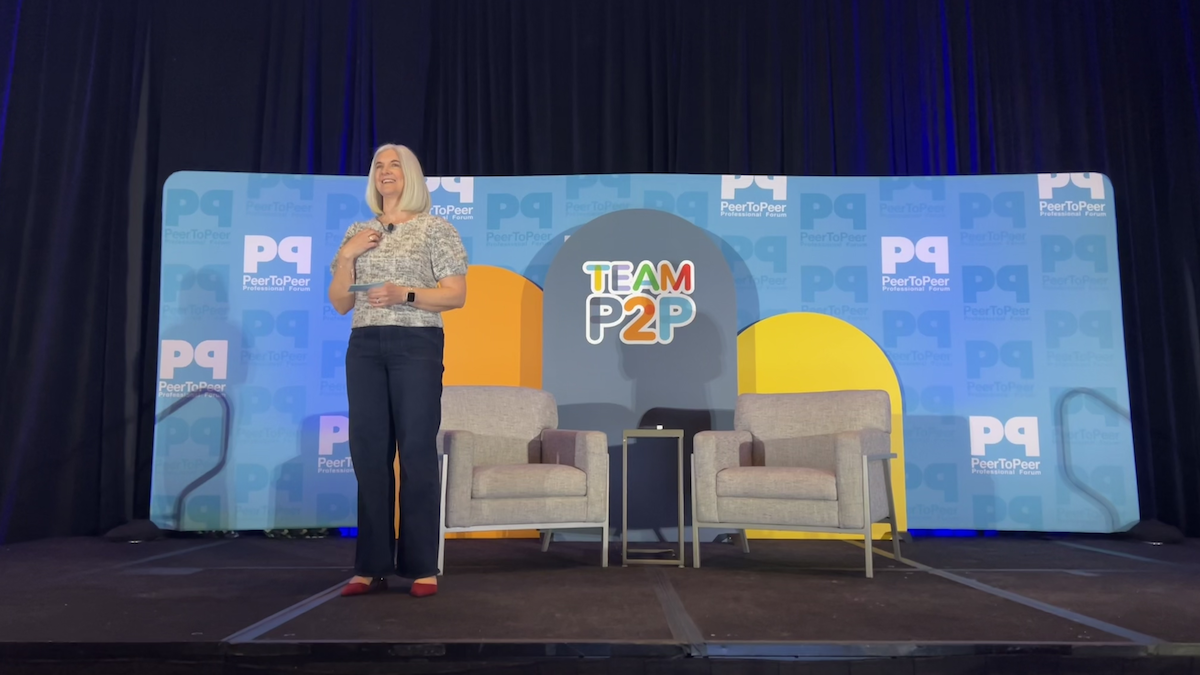
On stage at the General Opening Session, Natalie Stamer, Co-Owner and Managing Partner of Streetlight Digital, led the analysis of the 2025 Top 30 & Benchmarking Study
Natalie Stamer, Co-Founder and Managing Partner of Streetlight Digital, led the analysis of the 2025 Top 30 & Benchmarking Study. She shared that, over time, the P2P industry has seen 3% revenue growth, even as overall participation has declined.
This contrast signals something important: while fewer people may be signing up, engagement remains strong. For organizations, it underscores the critical role of participant activation within a P2P strategy. The opportunity isn’t just about acquiring more participants; it’s about equipping and inspiring those who do show up to fundraise more effectively.
Natalie also emphasized that while 3% growth may sound modest, it represents something far more meaningful. Sustained growth in a mature, competitive space reflects deep dedication, strong community ties, and operational discipline. Small margins achieved consistently over time point to underlying strength, and that’s an accomplishment worth recognizing.
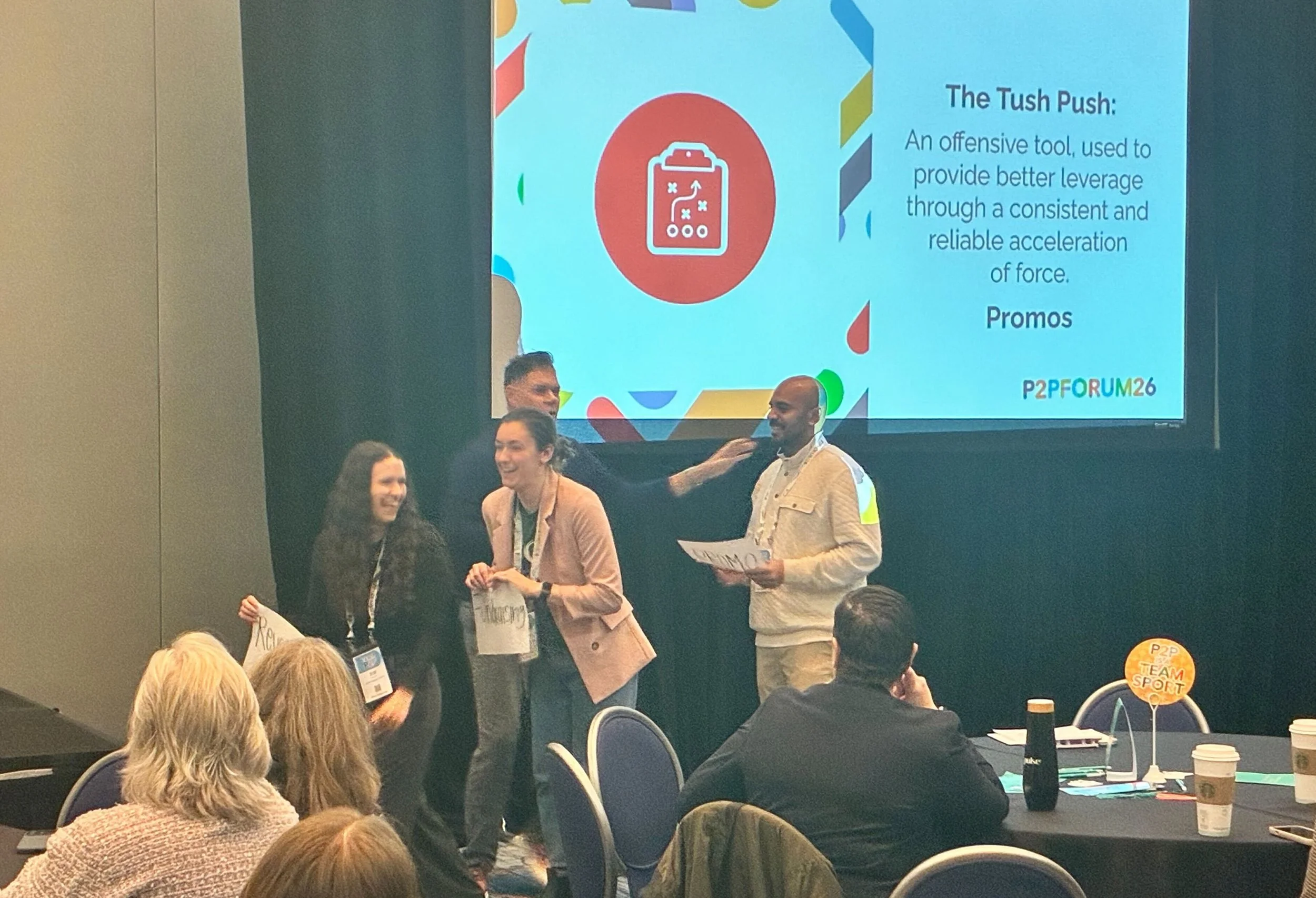
Action shot of Streetlight’s Kevin Sims (Director of Strategy, Streetlight Digital) demonstrating the power of a “tush push.”
Workshop Highlight: Commitment Required for Growth + The Famous Tush Push
“A lot of people notice when you succeed, but they don’t see what it takes to get there.” Dawn Staley, College Basketball Coach
In a hands-on session featuring Streetlight client Make-A-Wish America, Maggie Gibbons joined Streetlight’s Colleen Legge (VP of Strategy, P2P) and Kevin Sims (Director of Strategy, P2P) to explore the essential elements of building a gold-standard P2P program, one that drives transformative year-over-year revenue and deepens participant loyalty.
Maggie’s “Always Be Coaching” philosophy underscored a powerful truth: meaningful, individualized support, far beyond automated notifications and generic “thank-yous”, is what keeps participants engaged, confident, and motivated to fundraise. Thoughtful coaching creates connection, and connection fuels results.
Importantly, Maggie shared that this work is still in progress. She has clearly defined what her “Gold Medal” program looks like and is intentionally aligning her team around it. Her guiding belief is simple and focused: what you feed grows, and what you starve dies. That clarity is shaping where her team invests time, energy, and resources right now.
Central to all of these strategies is a simple but powerful truth: how you communicate with and guide participants directly influences their engagement, and ultimately, their results. And sometimes, growth doesn’t require a bigger campaign. It requires the right push at the right moment.
We couldn’t resist sharing an action shot of Kevin Sims illustrating the power of a “tush push,” a short, high-leverage promotional burst designed to spark early fundraising momentum through timely incentives.
In one case study, this approach came to life through a two-week, $50-threshold sock promotion targeting both registered participants and prospects. The goal wasn’t just to increase registrations, but to activate more fundraisers early in the season.
The results were striking:
Registrations increased 7% year over year
The number of $50+ fundraisers grew by 160%
Average dollars raised per fundraiser increased by $24
Overall revenue climbed 11%
These impressive results reveal how strategic, well-timed activation moments can dramatically shift early-season momentum and set the tone for stronger engagement and revenue throughout the campaign.
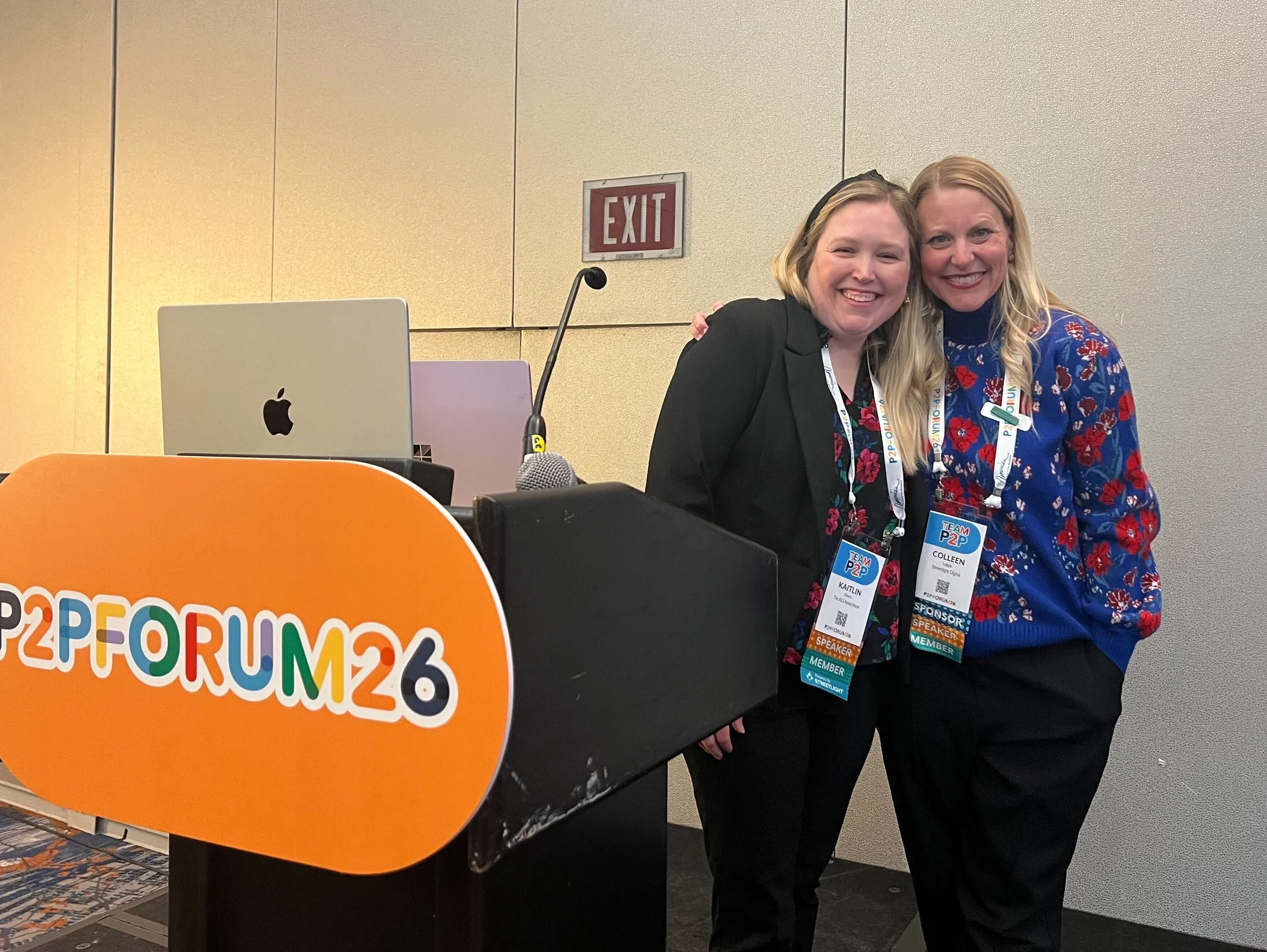
Kaitlin Shore, Director of Digital at the ALS Association, presenting with Colleen Legge, VP of Strategy, P2P at Streetlight Digital
Breakout Highlight: Hope And Urgency in Storytelling
In a compelling breakout session, Kaitlin Shore, Director of Digital at the ALS Association, shared how Streetlight and her team turned P2P storytelling into a fresh strategic narrative for each P2P program, no longer relying on one-size-fits-all recruitment and coaching methods. The goal was simple and clear: cut through the noise and market events in a way that makes someone say, “I want to be part of this.”
Instead of relying on pre-scheduled static email sequences, the ALS team built a comprehensive communication approach designed to answer three essential questions for every participant: Why this event? Why now? Why me?
The strategy pairs two essential forces: hope and urgency. Hope is the catalyst for action. It encourages people to act rather than passively accept difficult circumstances. Urgency clarifies why action must happen now. And how storytelling exists across emails, SMS, websites, paid search, and social.
This intentional pairing of hope and urgency transforms storytelling from passive inspiration into action. Participants are not just invited to register; they are equipped to understand their role, their impact, and what’s possible when they rally their community.

Breakout Highlight: Uniting Marketing and Development for a Winning Playbook
Vilma Consuegra, Chief Marketing Officer at Wounded Warrior Project® (Streetlight client), led a practical session on the common challenge many nonprofit leaders recognize but struggle to solve: fragmentation between marketing and development teams.
Vilma outlined what happens when organizations move from disconnected “plays” to a unified playbook. By centering work around shared outcomes, shared planning, shared execution, shared measurement, and shared celebration, teams create structural clarity for cross-functional collaboration and eliminate the friction that often slows nonprofit growth.
Instead of marketing generating awareness in isolation while development focuses solely on revenue conversion, both teams operate from common goals and mutually defined success metrics.
When marketing and development define success together, messaging becomes more cohesive, the supporter journey more seamless, and calls to action clearer and more compelling. Over time, these shared structures and habits build trust, reduce duplication of effort, and increase internal efficiency—positioning the organization for more sustainable growth.
Conclusion
In the face of economic shifts, evolving donor behavior, and changing search landscapes, nonprofits are under increasing pressure to demonstrate the value of P2P programs to leadership and to do more with less. Yet the lessons from the Top 30 Benchmarking Study, combined with the themes and practical strategies shared throughout the conference, make a compelling case for why P2P deserves both strategic priority and organizational trust.
P2P programs are uniquely positioned to cultivate long-term loyalty, activate community, and foster authentic human connection in an increasingly AI-saturated world. They also have the resilience to sustain revenue in uncertain environments. Organizations that prioritize these programs and invest in thoughtful, participant-centered strategies see measurable impact over time, proving that small, deliberate improvements compound into meaningful results.
For nonprofits looking to strengthen their internal case, third-party analysis and expert perspective with Streetlight can provide the objective, data-driven insights needed to illustrate P2P’s full potential. By consistently reviewing performance, listening closely to participants, and identifying the specific levers that drive engagement, organizations can make informed decisions and confidently advocate for the investment and focus their P2P programs deserve.